
Loading
 08 Oct
Your customers will never tell you they left. Here is what it is costing you.
Most business owners judge their website by how it looks. Customers judge it by how it feels, and the first thing they feel is speed.
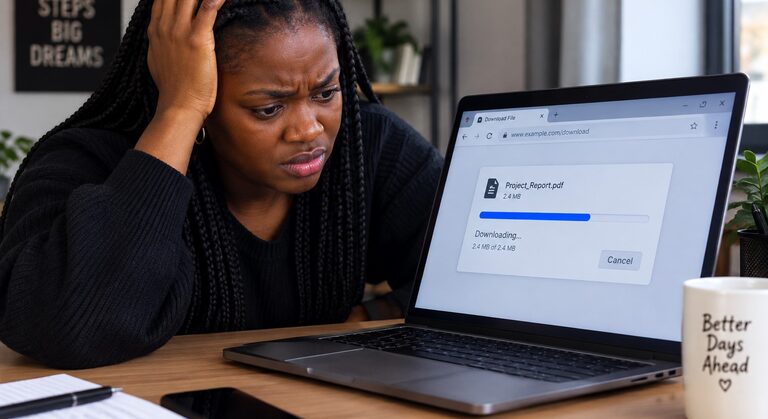
A slow website rarely announces itself. There is no error message and no angry email. The visitor clicks your link, waits, and leaves. You never find out they were there.
That silence is the cost. This article breaks down what a slow website really costs, why it happens, and how to start fixing it.
Think about what it takes to get one visitor to your site: an Instagram post, a Facebook ad, a WhatsApp referral, a Google search. Someone gave you their attention, and a slow site wastes it.
Google’s research has found that over half of mobile visits are abandoned when a page takes longer than three seconds to load. In Zimbabwe, most people browse on phones, and mobile data is expensive. A heavy website asks your customer to pay just to look at your business. Many decide it isn’t worth it.
Try this with your own numbers:
| Step | Example |
|---|---|
| Monthly website visitors | 2,000 |
| Share lost to slow loading (conservative) | 30% (600 people) |
| Share of those who would have enquired or bought | 5% (30 people) |
| Average customer value | $50 |
| Lost per month | $1,500 |
| Lost per year | $18,000 |
These figures are an example, and your own will differ. The point is that the loss is real, it repeats every month, and it grows every time you increase your marketing spend.
1.Wasted ad spend – Every paid click lands on the same slow page. You pay full price for visitors who never see your offer.
2.Damaged credibility – People link speed with professionalism. If your site hesitates, they assume your service might too.
3.Lower search visibility – Speed is part of how Google ranks pages. A slow site is harder to find, so you pay twice: once to attract people and again when they leave.
4.Extra pressure on your team – A fast, clear site answers common questions before they reach your inbox. A slow, confusing one sends them to your staff, or loses the customer entirely.
5.Weaker results from everything else – Better content, bigger budgets and more followers only pour more water into the same leaking bucket.
Slow sites are rarely caused by one big mistake. They build up from small ones.
Oversized images
Photos uploaded at full camera size are the most common culprit. A single image can be bigger than the rest of the page combined.
Too many plugins and add-ons
Each one adds code the browser has to load, and many are never removed after they stop being useful.
Cheap or overloaded hosting
Shared hosting with too many sites on one server slows everything down, especially at busy times.
Messy code
Years of redesigns and quick fixes leave behind old code that still loads for every visitor.
Desktop-first design
A site built for a large screen and squeezed onto mobile often loads far more than a phone needs.
No caching
Without it, your site rebuilds each page from scratch for every visitor.

You do not need technical skills to get a first read.
Fixing speed is usually a set of small improvements rather than a rebuild:
Each fix is small, but together they change how your site feels, and how many visitors stay.
How fast should my website load?
Aim for under three seconds on mobile. Faster is better, but that is the line most visitors stop waiting at.
Does website speed affect my Google ranking?
Yes. Speed is one of several factors Google uses, and it also affects how long visitors stay, which matters too.
Can I fix a slow website myself?
Some fixes, like compressing images and removing unused plugins, are simple. Hosting, code and design problems usually need a developer.
Is a slow website really that costly for a small business?
Often more than for a large one. Small businesses depend on every visitor they pay to attract, so each lost one hurts more.
A slow website is not a small technical issue. It is a steady, invisible loss of customers, ad budget and trust. The good news is that it is one of the most fixable problems in your business.
At Quatrohaus, we build and improve websites for businesses across Zimbabwe, and speed is where we start. If this article made you wonder about your own site, get in touch

01 Jun, 2026
